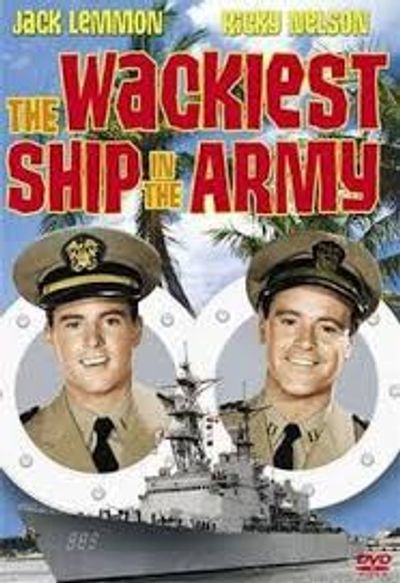
The Wackiest Ship in the Army (1960)
The Wackiest Ship in the Army is a lighthearted 1960 war comedy that blends comedy, adventure, and mild drama into an easygoing naval tale. Directed by Richard Murphy and featuring the talents of Jack Lemmon and Ricky Nelson, this film is loosely inspired by the true story of the USS Echo, an unlikely sailing vessel pressed into wartime service.
In this Jack Lemmon film, Lemmon plays Lieutenant Rip Crandall, a former yachtsman who is reluctantly assigned command of an aging sailing ship crewed by inexperienced and often clueless sailors. The premise sets the tone: this is not a gritty war epic but a story about misfits, improvisation, and reluctant heroism. Lemmon carries the film with his trademark charm, balancing frustration, sarcasm, and quiet competence. Even when the script leans heavily into broad humor, his performance keeps the story grounded.
Ricky Nelson, cast as the eager but green Ensign Tommy Hanson, brings a youthful earnestness that complements Lemmon’s more seasoned presence. While Nelson’s acting can be a bit stiff, his sincerity works for the role, and his character’s growth during the mission adds a modest emotional arc to the story. The supporting cast, filled with oddball sailors and familiar character actors, reinforces the film’s “ragtag crew” appeal.
Visually, the film benefits from its on-location shooting in Pearl Harbor and Kauai, which lends authenticity to what might otherwise feel like a stage-bound comedy. The sailing sequences, storms, and encounters with enemy forces create moments of genuine tension, even if the danger is softened by the film’s overall upbeat tone.
Tonally, The Wackiest Ship in the Army sits comfortably alongside other mid-century war comedies. It doesn’t question the war or delve deeply into its costs; instead, it emphasizes camaraderie, ingenuity, and doing one’s duty under strange circumstances. The humor is gentle rather than laugh-out-loud, and the patriotic message is unmistakable but not especially heavy-handed.
Ultimately, this film is best appreciated as a period piece—an example of how Hollywood in the late 1950s and early 1960s liked to package war stories with humor and heart. It may feel dated to modern audiences, but fans of classic cinema or Jack Lemmon’s early work will likely find it an enjoyable and charming watch. It’s not the wackiest war movie ever made, but it’s pleasant, sincere, and buoyed by a strong lead performance.