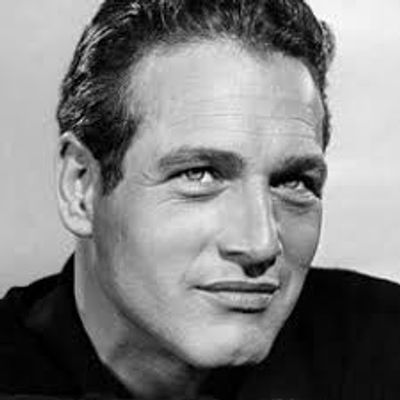
Paul Newman Biography: A Hollywood Legend
Stardom with a Conscience
Paul Newman (1925–2008): Stardom with a Conscience
Paul Newman was more than a movie star. He was a rare figure whose fame never eclipsed his humanity, whose success deepened rather than diluted his sense of responsibility to others. With his unmistakable blue eyes and quiet intensity, Newman became one of the defining screen presences of the 20th century—yet his greatest legacy may lie not only in the films he made, but in the lives he changed through his extraordinary commitment to philanthropy.
Early Life and Childhood
Paul Leonard Newman was born on January 26, 1925, in Cleveland Heights, Ohio, and raised in nearby Shaker Heights, an affluent suburb where his father owned a successful sporting‑goods store . His mother, Teresa, had a strong interest in the arts and encouraged her son’s early fascination with theater. Newman appeared in stage productions as a child, including performances at the Cleveland Play House, planting the seeds for a career he did not yet fully imagine.
Before acting became central to his life, Newman envisioned himself as an athlete. After graduating high school, he enlisted in the U.S. Navy during World War II, serving in the Pacific as a radio operator after being disqualified from pilot training due to color blindness. Following the war, he attended Kenyon College, where he initially focused on sports but eventually shifted his studies to drama—an inflection point that redirected his life entirely.
Rise to Stardom
After further training at the Yale School of Drama and the Actors Studio, Newman broke through on Broadway in Picnic (1953) before transitioning to film. His early Hollywood years were marked by both struggle and growth, culminating in star‑making performances in Somebody Up There Likes Me (1956) and Cat on a Hot Tin Roof (1958), which earned him his first Academy Award nomination.
Unlike many leading men, Newman gravitated toward characters defined by moral tension, rebellion, or quiet introspection. Over time, he became known for portraying anti‑heroes—men resisting authority, grappling with conscience, or seeking redemption—roles that mirrored his own skepticism of power and fame.
Paul Newman’s Top 10 Films
While his career spanned more than five decades, the following films are widely regarded as his most essential performances:
- The Hustler (1961) – Newman’s portrayal of “Fast” Eddie Felson defined a generation of cinematic anti‑heroes
- Cool Hand Luke (1967) – A landmark performance of defiance and existential dignity
- Butch Cassidy and the Sundance Kid (1969) – His iconic pairing with Robert Redford became one of cinema’s great duos
- Hud (1963) – A morally complex performance that showcased Newman’s dramatic depth
- The Sting (1973) – A masterful blend of charm and intelligence in a Best Picture winner
- The Verdict (1982) – A late‑career triumph as a broken lawyer seeking redemption
- The Color of Money (1986) – His long‑awaited Oscar‑winning return as Fast Eddie Felson
- Nobody’s Fool (1994) – A deeply human, understated performance that earned another Oscar nomination
- Road to Perdition (2002) – A chilling and restrained turn as a crime patriarch
- Slap Shot (1977) – A cult classic that revealed Newman’s comic fearlessness
Awards and Honors
Paul Newman’s achievements were recognized across every major institution in film and television:
- Academy Awards
- Winner, Best Actor – The Color of Money (1986)
- Ten competitive nominations
- Academy Honorary Award (1986)
- Jean Hersholt Humanitarian Award (1994)
- Golden Globe Awards
- Seven wins, including acting and honorary honors
- BAFTA Awards
- Winner for The Hustler
- Primetime Emmy Award
- Winner for Empire Falls (2005)
- Lifetime Honors
- Cecil B. DeMille Award
- Screen Actors Guild Life Achievement Award
- Kennedy Center Honors
Philanthropy: A Radical Act of Giving
Newman’s most extraordinary legacy may be his philanthropy. In 1982, he co‑founded Newman’s Own, a food company that pledged 100% of its post‑tax profits to charity—a promise that redefined corporate giving. By 2021, the company had donated over $570 million to charitable causes worldwide.
His generosity extended far beyond Newman’s Own. He founded the Hole in the Wall Gang Camp in 1988, providing free summer camps for children with serious illnesses, which later expanded into the global
SeriousFun Children’s Network. He also established the Scott Newman Center to combat substance abuse in honor of his late son and supported initiatives ranging from safe water access to arts education.
Newman never sought praise for his generosity. He often remarked that those who are lucky “should hold their hands out to those who aren’t,” a philosophy that guided his actions for decades.
An Enduring Legacy
Paul Newman died on September 26, 2008, but his influence remains undiminished. He proved that integrity could coexist with stardom, that success could be shared rather than hoarded, and that an actor’s responsibility extended beyond the screen. His performances continue to inspire, but his life continues to instruct—offering a rare model of fame guided by conscience and generosity.
Paul Newman was not just a great actor. He was a great citizen of the world.